The Ostrich in the Vineyard and other sights and incidents in South Africa
February 6, 2010: on the plane from Atlanta to Joburg
We were so fortunate to make the flight from Seattle to Atlanta and now, because we flew standby, they put Eric and I in business class to Johannesburg! 15 hours of giddy luxury are in progress; menus, wine, ice cream sundaes, noise cancelling head phones and hot face towels are only half of the pleasures. I keep thinking, “This is the last time I’ll get to__________.” What contrasting modes of transportation I will have. Who knows what the busses and trains will be like! I am blessed with versatility to move easily between the grandeur and rugged; the ability to delight in good gifts of all sorts and enjoy each for its own without diminishing the beauty of each with feelings of longing or guilt.
February 7, 2010: Eric’s friend Lisa from L’Abri
Lisa picked us up from the airport in a small grass green car—very chic—which she warned Eric not to make fun of her for. She couldn’t stop smiling. I like Lisa a lot. She is lively and interesting, and very fond of Eric. Her mother lives in a beautiful white house with a pool and many rooms with flowers and libraries and paintings. She is Dutch and I am I am enjoying hearing her story. Eric and I had a nice time not sleeping because of jet lag. We read, talked, laughed, wondered whether it would ever be light, had morning prayer together and listened to more morning birds than I have ever heard.
February 8, 2010: The train to Capetown
“It’s friendly, it’s safe, it’s Shosholoza Meyi”---the train billboard
Flocks of little delicate butterflies frolic white in the grass, faster than the train, but directionless.
Man running down the platform in short rugby shorts which Lisa tells me is declaratively Afrikaan.
I wake up from a nap to the smell of hot, grey, rain. My calves are crusted with a pillowcase of dirt from the open window and little tuffs of white dandelion seeds swirl inside the carriage.
The stars covered the entire sky over the Free State with no other lights interfering
In the morning I watched the sunrise over the desertous stubble of the Karou. The night transformed the endless lush of yesterday’s view.
We went through damp, stony smelling tunnels lasting 5-10 minutes each. When we emerged from under the mountains we came out into vineyards surrounded by cliffed mountains. There are Ostriches in the Vineyards!
February 9, 2010: Capetown and hectic slang
Tidbits from the thatched bathroom of the Rhodes Memorial: small graffiti for huge historic tension.
“Cecil Rhodes needs to come off his throne. We will not celebrate empire anymore!”
In reply was scrawled:
“The Empire strikes back! If it weren’t for Cecil Rhodes you would still be living in a hut the size of this toilet.”
Cecil Rhodes was the British man who owned most of the gold mines and developed a lot of South Africa. “He was a bit of a racist asshole in my opinion”—Lisa
S.A. slang lesson
Hectic: Epic, crazy, wow, cool, rad, uh huh, hmmmm (can be used by University students anytime, any situation)
Ex: “I am headed up to Kenya next week by bus and train” ---“Oh hectic!”
Vibey: Containing good vibes.
Ex: “It’s just such a vibey place---you’ll love it!”
Digs: Any sort of house (not flat) that college students live in.
Ex: “We love our digs. It is the best place we’ve ever lived in together.”
Digsmate: Roomate
Ex: “Anna, let me introduce you to my digsmate, Nox.”
Capetown
We had such a holiday in Capetown. I went swimming at a different beach almost everyday. (You can even swim in the Atlantic Ocean and Indian Ocean on the same day!) We hiked to the top of Lion’s head and overlooked the Cape. We also went salsa dancing and hung out at several fabulous coffee shops. I am leaning towards putting Capetown down as the most beautiful city I have ever seen, however, I am taken aback by the huge poverty gap and cultural exclusiveness between the white South Africans and the black South Africans. A lot has changed since 1994 (which I think has been quite hard for the whites) but it still seems that everyone is racist. Everyone lives in fear of theft, robbery and who knows what (possibly for valid reasons) but it is no way to live life in my opinion. We drive by the townships and nobody even talks about it. There is still so much I don’t understand about this place and I was just plopped here almost by accident. Being white in South Africa means something totally different than being Mzungu in other parts of Africa.
The Hectic (in all its South African slang and literal meanings) Journey North
February 13, 2010: Johannesburg Park Station Greyhound to Bulawayo, Zimbabwe
The bus took off at 8:30 pm. Joke (yokay), Lisa’s mom sent me off and I shuffled through luggage lines and passport checks in the dimly lit parking lot. I was seated next to Inkosi, which means King, who is a 29 year old Zimbabwean man who works with orphans. We were fast friends before the bus left the station. He was the answer to our prayers for this leg of the journey. He guided me throughout this part of the journey and took care of me well. When we got to the Zimbabwean boarder about 3 am, there were already hundreds of trucks and busses in line, piled three times as high as the roof with food supplies, diapers, sacks of maize, huge striped plastic bags with zippers, building materials, yellow jerry cans---for the last few years, everyone comes over to S.A. for certain supplies that are not being produced in Zimbabwe right now. We had to take all of the afore mentioned items out of the bottom of our bus and open them all up for hours of inspections.
I don’t think Inkosi had much faith in my ability to make it around on my own, which challenged my pride and my independence, but was, I am sure, much needed and helpful. When we arrived in Bulawayo, he walked me to the train station across town, where I was able to book a ticket and store my bag. Then he took me to his church—a huge mega church with ten services at least 500 people each. I was the only mzungu and it was totally natural (for everyone else, not for me, I was soaking it all in, noticing every minute detail). The worship leader held a pink silk hankie to wipe the sweat off the microphone and his forehead. The girl in charge of leading the intercessory prayer time knew her scripture like no other. The songs were in several languages, Zulu, Debele, English…I don’t even know…but I like it when everyone dance walks with the little shake and sway and up go the hands in a little clap. When anyone is in agreement with the preacher they raise their hand—it’s quite funny to see hands shooting up like watered flowers here and there throughout the brown headed soil.
I had been praying for astounding hospitality from those whom I would meet along the way, and I received it. After church, I went on a matatu to Inkosi’s mother’s house outside of town. We spent the day visiting his neighbors and walking around the area spying on beautiful sounding church choirs and running into old friends.
In the evening we headed back to town where I boarded the 8:00 train for Victoria Falls.
February 14, 2010 Train from Bulawayo to Vic Falls
Everything was dark, the sky, the platform, the inside of the wood paneled Bitish compartments, everything. I found my compartment 1068 B and slipped inside with two women already relaxing and chattering away, clinking their spoons on the tin enameled bowls as they ate. This lazy clinking and chattering was a familiar, comforting sound and I soon sat down and introduced myself. “Oh, Anna, the mother of Mary…and I am Miriam, sister of Moses, and this is Martha, sister to Lazerus’ in the Bible.” Said the elder of the two sisters. Martha exhaled a sigh of pleasure and said, “Oh, I like our Bible names!” in her high, nasally way.
These two Catholic gems were traveling to Namibia to sell clothes. (They spend half of each month at home sewing, and the other half in Namibia selling.) I couldn’t make out their faces in our small, dark compartment, but I sat next to their big, friendly, Zimbabwean bodies and all doubts of strangers and thievery left me. In fact, Inkosi had just warned me about women thieves, don’t even trust women, he said. And soon they were in turn telling me, “Just trust women, I can’t believe you are doing this Anne, it is so far, but please, you just ask women and they won’t cheat you.”
Another woman joined us, Mrs. Zulu, a 65 year old Zambian women in a semi-ragged skirt and head scarf with a quiet, wise demeanor. After feeding me supper (which was the first meal I had all day) they embarked on some sort of “Can you imagine! Oh wow, mmmm...”.sort of womanly conversation in Dbele which I don’t understand, but I had fun guessing what it was about based off the responses and intonations of the listeners with their sighed-out “ehhh’s” and inhaled, up stroked “hey’s” and tut tuts with the toungue and head shakes. A few English words stood out: Dutch Reform, Maria, The Blesseds, Catholic…..I asked her what they were talking about. Miriam explained they were discussing her oldest daughter who has come back from school and refuses to go to the same church. “ She is disrespecting me and shaming me for respecting Jesus’ mother, Mere and I ask her what she’s learning in that church of hers and she can’t even tell me… Yes, Anna, we are discussing the problem of youth these days.”
When we settled to sleep I asked them to sing. Martha lead with her high, youthful voice, Mama Zulu occasionally drawled out a base line and Miriam and I joined somewhere in between them. It wasn’t very harmonious or beautiful, but it was the exhale of all the weariness or troubles of a day and an inhale of “Thank you Jesus, Hosanna, Aleluia Amen” which can’t but help to oxegenate peace inside you. When we were finished Martha said as natural as anything to a cabin of strangers “Let us pray, everyone pray for yourself.” Everyone started a monotone run-on of fervent prayer in different keys while my prayers were slow and had more difficulty coming out. The last few days have been prayers uttered constantly inside a quiet cocoon; theirs were colorful, beating butterfly wings. I love sleeping on trains.
Feb. 15 (my half birthday) Bus to Lusaka, Zambia
As soon as we stepped off the train in Victoria Falls, the baboons began running throughout the cars, in and out of the windows, up on the roof—everywhere. Victoria Falls seems beautiful but I didn’t spend much time there. Hopefully I will get to spend more time there later. I walked across the bridge and saw the Zambezi River winding through the canyon and the falls spilling over out of the grey sky. Then I headed straight for immigration with Mrs. Zulu. I ended up changing plans to travel with Mrs. Zulu to Lusaka by bus instead of catching a train to Kapiri Mposhi. I decided that I would travel as far as I could with people I knew (sort of). This way, I could be sure to catch the long train out of Kapiri Mposhi the next day and not wait several days for the next train. When our bus seemed like it was entering Lusaka, I became curious about where I would go. It was dark and I didn’t have any plan. I hadn’t planned on coming to Lusaka at all so I knew little about it. Mrs. Zulu thought I could spend the night in the bus since I had to catch another early bus the next morning. I have been learning not to fear, because God hasn’t given us a spirit of fear, but of sonship, by where we can cry “Abba Father.” However, I’ll always remember the intensity of arriving in big cities (Lusaka is only one of them) in the dark of night with nowhere to go—the bus would pull into some station swollen with people yelling outside, waiting to swallow you up in their taxis. Others lay around the dirty cement with bright, worn fabrics crunched all over their waists.
Once outside, I evaded all the taxi men and was fluttered about by Mrs. Zulu’s relatives who rushed me off with their nephew (who was also a taxi driver) to a Backpackers. I was very thankful. I met some interesting people on my dormitory porch. “Hi, my name is Doh, like doh, ray, me, fa, so…” said the sausage eating, whisky drinking, smiley Korean. He was impressed with the only Korean phrase I know, which, apparently is only used by the grandmother generation, meaning, “Oo la la,” or ‘Oh God!” Another guy from Demark, Anders, sat fiddling with a computer. “He has come to be Che Gavara” said the Korean, lifting his glass in a toast aimed his direction. He is interning with a radio station to give people a voice and an opportunity to hear all sorts of news. The other guy, a German, has been cycling from Germany since last May and is on his way to Capetown!
February 16, 2010 Kapiri Mposhi and the train to Dar es Salaam
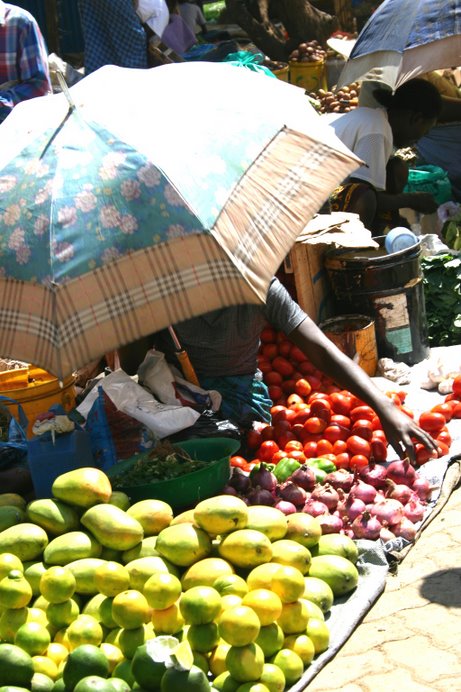
Kapiri Mposhi loomed like another big city in my mind; I was wrong. I was the only person to get off when the bus pulled to the side of road amidst a one street town bustling in a classically African street market sort of way. I had passed hundreds of these little towns in the past few days. They usually only last about 42 seconds outside the bus window. I was so delighted by the prospect of spending the day in a low key wandering way in a place akin to the area I stay in Kenya. The train station was a bit hard to find because it was about 5k out through sandy trails lined with green stalks taller than I am. I dragged my little carry on suitcase and made slow snake tracks behind me.
Much to my surprise, the station was huge and slowly by slowly filled with people and wares waiting for the train. I was wearing a Chitenge around my dress like every other Zambian woman-- so many people made comments to themselves or to me-- “I just saw you wearing this and I thought I wanted to talk to you…” ….. “ I just saw you and you are O.K.” …… “What I was saying earlier to that lady, was that you are a real Zambian lady. It is very good you are just putting on like us.” I think that kept me out of trouble and in a false way said I knew what I was doing. (Of course I didn’t know a thing.)
February 17, 2010 Two days of solitude on a train
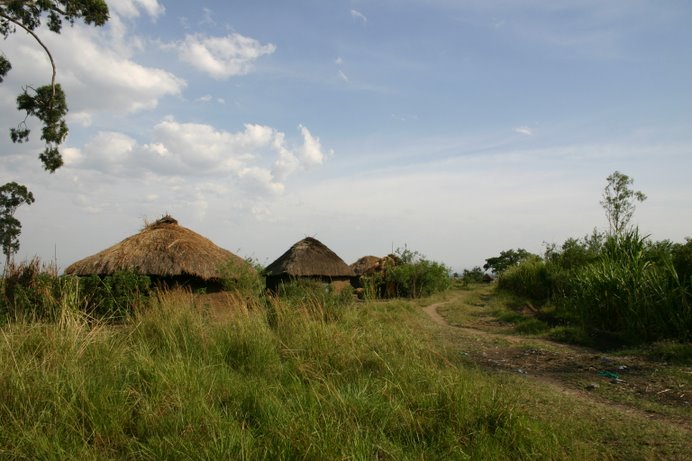
They put me in a compartment all by myself, (after moving me around three times) which I had prayed for. Even though I love being with people, I really wanted to be alone for awhile. I am relaxing and reading and praying and painting, but my attention is only long for looking out the window. I can stick my head out the window for hours without tiring and I enjoy just staring more than anything else. I see lush green hillsides of Maize and trees and sometimes red mud and thatch houses. At present, thunder sounds from the yellow-grey sky and the green land stands out—brightened more by grey storm than by blue sky bright. This place has maximum fertility. We stop at all sorts of cute little stations and some bigger ones. Occasionally women and men will run to the tracks to sell doughnuts which are displayed in dark brown circles on round trays balanced on top of the women’s heads. Men sell boxes of water and peanuts. Children throw their hands forward to beg or just to talk. When we crossed the border to Tanzania the next morning, I could speak to them in Kiswahili which they thought was funny. The manager of the train keeps coming to check on me and other train workers or passengers I’ve met stop in sometimes. There are a few other Mzungus. A Swiss couple and an American guy are all in my car. I feel a bit blank. Not dim or sad, not excited or scared, but being alone and aloud, I am nothing in particular—like sleep, I can just be. At times, when the compartment door is closed, I don’t even have to react to anyone or anything.
It is a funny thing…once you cross the border on the train, you cannot use Kwacha anymore. You have to start using Tanzanian shillings, even to get water on board. I am weary of holding 5 currencies in my head at once and trying to get them is another story.
The immigration team came on in their blue uniforms and informed me that the transit visa was more than I expected and they didn’t like the slight rip in my 5 dollar bills and would not accept them. I told them I didn’t have any others to give them so he took me to see his boss. He was definitely the head hancho—a huge man sitting in the “office” compartment of the train surrounded by other uniformed officials along with Zambian passports and bills spilling over the little table. “See look—that American paid.” Finally they stamped my passport with a note informing the next border to make me pay on exit. When I exited Tanzania the visa was even less expensive.
Two Tanzanian women named Hilda and Grace were added to my compartment on the second night. At first they were shy but they enjoyed my Swahili attempts and soon we were able to talk and be comfortable. Grace and I stayed up long into the night exchanging songs and singing the ones I knew. I wasn’t very good at singing the new ones on my first try and she laughed at me a lot.
February 18, 2010 Getting mixed up with the police in the Dar station
I hustled my bag in front of me and tried to squeeze my way through the aisles to the coaches on the platform. Michael, a 19 year old Adventist student missionary from Oregon, was leaving his sight in Zambia to meet some others in Nairobi. We decided to figure out the busses together and had arranged to find our way to Ubungo Station together. When we were on the platform a taxi man began harassing us with prices but my friend Drasilla was willing to take us there by public. The taxi man was insistent on getting our business and began to fight Drasilla, bringing the police woman into it in a Swahili shout match saying she could not be trusted with Mzungus. I trusted her much more than this man, but in the end, the policewomen made us go with him and I was able to cut his outrageous price by 3/5.
I felt more helpless this day than any other. I had to use an ATM to get Tanzanian shillings, but my card wouldn’t work at any ATM. We stopped at little gas stations in the dirt and large corporate banks inside hotels—nothing worked and I couldn’t get a hold of my bank. I had to save my U.S dollars for the next two visas, otherwise I would have exchanged them. Luckily, I was with Michael who was able to pay for everything until I could make the phone call to the bank, which in itself, proved difficult. If I were not with Michael, I would have been really stuck, not even able to make a phone call. When I finally paid a guy to buy a SIM and let me use his phone, it was in the midst of a power outage and the discovery of all of Michael’s money stolen while we were gone at the beach. I had to stay on the line with the bank lady! Even though all of this craziness was going on around me in the dark, I had to try to answer her questions about my recent activities in order for my ATM to work. They hadn’t set it right when I called them from the States and they needed my driver’s license etc… “On which day last month did you_______...” In the end, it worked out well. Since he had paid my bus fare, less of his money was gone and now I could get some shillings to pay him back.
February 19, 2010 The Spider Bus to Nairobi
5:30 am Ubungo Station
There are 100s of busses of all sorts crowded together in the crowded dark of early morning. Our tickets were given to another bus line because ours broke and we would never have found out, but a man breathlessly reached us through the crowd and directed us to the Spider bus, which was a dodgy red piece headed to Nairobi. The bus stayed in a jam for 2 hours before making it out. “Do you know what jamming is? Yes, we are very much in a jam” said the ticket man. The bus continued to fill with people even last minute deals were cut and people threw their stuff under as we were moving slowly through the jam. The bus had a dirty cream-fringed curtain in front. If you’ve ever been on a bus with a fringed curtain, you know what sort of bus this is. It is called the Spider and has a huge spider covering the windshield and little spider stickers plastered inside and out.
A light rain fell and was absorbed into the thick, sweaty air. I felt uncontrollable tiredness and heavy eyed submission to sleep. While I lay out the window in a conscious slumber, I could hear a man rebuking and admonishing various persons on the bus up and down the aisle. He was a bold voiced Swahili preacher only tonally amusing my half-observing self. I could hear people outside the bus saying, “Ongalea, Mzungu na lala” Look, look at that white girl sleeping! I slept to avoid impatience. When I could manage my eyelids I saw a girl in the bus jam next to us casually drop a lock of extension hair out the window into a puddle. Now a background of African music mixes lightly with the rattling window, which the man in front can’t stand—he keeps trying to adjust it and shove papers inside to brace it. The keyboard and drums and chorus of voices roll on and on as the bus starts and stops and makes its way 20 hrs North passed Kilimanjaro and the Pace mountains and a place that looks like a western movie desert.
The evening traded places with the day and didn’t care who we were—all of us silent passengers crossing the border---all subject to pre and post border hours of flying off our seats through the acacia bush on dirt roads. Lightning flashed the silhouetted trees through the cold, dust-caked glass and the jovial keyboard and chorus played on. At one point I thought we were trying to evade the border. It turned out to be my imagination enjoying the suspense and drama of this excellent ride. We soon reached Namanga, the border, which I have crossed before. It was now at least midnight and I assumed we would reach Nairobi by 8:00 pm. The whole bus had to wait for me while I convinced and prayed for the officer to accept my older version of a $20 bill. “Eh! What is this? We only accept the 2000 series.” The bill was a brand new bill that I took off of an origami dollar shirt my grandparents had given to me when I graduated from highschool almost seven years ago. They decided to take it anyways.
A few hours later we arrived in Nairobi where I was to get a ride with Michael’s friend to a place I was going to stay before heading out to Kisumu in the morning. In the end, we couldn’t find it and I stayed with these Adventist missionaries at the uncle’s house. It was a very interesting time hearing and observing the perspective of this family who has lived all over Africa for the past 20 years. The uncle owns a luxury resort in the Masai Mara (which I am invited to visit anytime). The nephew, Jared, lives out in the Mara building an orphanage. He took us out rock crawling in his 4-wheel drive truck up on top of the Ngong hills. If you have ever read or seen the movie “Out of Africa” you know the Ngong hills. The town is named Karen, after Karen Blixen and I even saw her house. At this point I had been traveling for at least a week both night and day and I was glad to run around and be tossed about by forceful, refreshing winds. It doesn’t feel like it, but Nairobi is around 6,000 ft. in elevation and I was looking over the whole of it on top of the hills.
The next morning I took the Easy Coach to Kisumu. It was the easiest bus ride I have ever taken. I used to look forward to this ride from Nairobi to Kisumu as a long entrance and reintroduction to Africa; This time I had to be convinced by my seat mate to get off the bus in Kisumu because I didn’t recognize the new station and I thought we couldn’t possibly be there so soon! John and Jean were there to welcome me and take me back to the farm. I was so happy to be there and felt overwhelmed with the familiarity in contrast to so many days of stimulation and uncertainty.
I made this pilgrimage because I love Africa and I wanted to see God’s faithfulness. Not as a test for God to show himself necessarily, but as a practice for me to trust God with my life—with something that took faith and was so much bigger than myself. Underneath it all, I could not control everything or possibly succeed on my own. I am praying that this journey will be an alter or an Ebenezer in my life reminding me of when God has been so faithful, so that when I pass through the waters, I will know my anchor will hold, and that Christ has delivered me and will continue. Thank you for praying for me. I was reminded of your prayers in every conversation and when I met each person we prayed would be there to help me. Na tosha—Nitakwambia kuhusu maisha yangu na Nehemia baadaye. (This is enough for now….I’ll tell you about life at Nehemiah later!)
Saturday, February 27, 2010


Thursday, February 4, 2010
En Route
Tomorrow my younger brother Eric and I head to the Sea-Tac airport at dawn to catch a standby plane to Atlanta and then on to Johannesburg. Lisa, Eric's friend from L'Abri, will pick us up and we will train to Capetown the next day to spend time with her family. On Saturday the 13th, I leave them to begin the journey North to Kenya. Take a look at the map below to trace the overland route of trains and busses. I start with a Greyhound to Bulawayo, Zimbabwe, then take the Bulawayo--Victoria Falls train. The next morning the train will stop before the falls where we will all get out and walk over the bridge into Livingstone, Zambia. The next leg is a train from Livingstone to Kapiri Mposhi. The longest train leaves Kapiri Mposhi and arrives in Dar Es Salaam 45-72 hrs after leaving :) After Dar, I will Akamba and Easy Coach all the way home to Kisumu and on to Nehemiah.
www.seat61.com/zambia.htm
www.seat61.com/Map-southernafrica.htm
www.nehemiahinternational.org
www.seat61.com/zambia.htm
www.seat61.com/Map-southernafrica.htm
www.nehemiahinternational.org

Thursday, January 28, 2010


Tuesday, July 24, 2007
why I love kenya
I came home from Kenya about two weeks ago. In the midst of popping back through the wardrobe as it seemed to me last time, I’ve been thinking about why I love Kenya so much and what I hate about it. Perhaps it is a mesh of the two that makes it real. I love knowing deeply enough to hate some things. Things that happen to people, things that people hold on to so tightly, things people are never taught…But sometimes what I love most about Kenyans springs from the effect of something I hate.
Death. There’s death all the time, all around. I hate that there are
Sicknesses people won’t sacrifice to treat but claim a pricey funeral. The traditions around death make me sick. My friend Kevin who came to the farm and I went to Milkah’s house a few days after her daughter-in-law died. This was the second funeral I’d been to in her village. Relatives and friends come from all over and camp out around the compound. The family slaughters a cow which perhaps they paid a year for. Everyone sings all night and sits around all day, eating the family out until the food’s gone. I hate the collection of money demanded of hard workers in the family to pay for funerals. Yet I love the community, I love the family dependency (to a certain degree it is beautiful, but somewhere along the line it becomes outrageous, disgusting and debilitating.)
The mud on one house cracks with age as the walls of another are just drying. Last week when we were visiting, her son was just finishing throwing the mud, Kevin got to help him. “Nyumba yako ni mzuri kabisa!” (Your house is so good!) I say…I am in love with the genius use of cow dung:) I miss her family especially. Milkah and I don’t even speak English together, but we love each other so much. I carry with me her 5 minute hugs after showing me her dead daughter’s body under the shady branches, her hugs everyday for that matter. I carry her wet cheeks and unabashed sorrow when we said goodbye in my room, when the rest of us were wiping and holding back ours.
Death, I love the way it demands a life of honest thankfulness for today because you were given the grace to see it! “So, I’ll see you in a couple years I hope… “ “Yes, it’s only that life which we are praying for, then we will be able to see each other again.”
My mind can’t genuinely comprehend that I might not be around in two years, let alone tomorrow. I’m hoping to learn, so that I can live in sincere appreciation!
Death, I love that it is the worst end of man yet we don’t have to fear it—such is freedom.
Wickedness
“Moreover I saw under the sun that in the place of justice, wickedness was there, and in the place of righteousness, wickedness was there as well. I said in my heart, God will judge the righteous and the wicked, for he has appointed a time for every matter, and for every work. I said in my heart with regard to human beings that God is testing them to show that they are but animals. - Ecclesiastes 3:16-18”
Sometimes I become discouraged by wickedness, sometimes I feel it pervading the culture—lying becomes as natural as breathing. Not just Kenyan culture but everywhere. The shortcomings of others are novel and shocking, but it’s just because we’re all at home with our own maladies—but we all have them. I’ve talked to so many people who say how hard it is to move forward in life when everyone can’t stand to watch you get ahead, pull through with your ideas, or be better than them. This angers me more than a lot of things. Instead of building by leaning on each other and using one another as support beams and foundation for the building, everyone tears it down and tries to stand tall and be something as a single beam. Even just at the school level, I always encourage people to compete in a good and supportive way, not in the typical “knock ‘em all down and be the tallest” kind of way.
Perhaps everyone goes through phases in their life when the evil of the world mulls on their tongue more than before. Again, back to the mesh of love-hate feelings, the sweetness of grace accompanies the mulling bitterness of evil. I can think of nothing lovelier than these words in Jeremiah…after everything Israel did to provoke the anger of the Lord.
“You are saying about this city, ‘By the sword, famine and plague it will be handed over to the king of Babylon”; but this is what the Lord, the God of Israel, says: I will surely gather them from all the lands where I banish them in my furious anger and great wrath; I will bring them back to this place and let them live in safety. They will be my people, and I will be their God. I will give them singleness of heart and action, so that they will always fear me for their own good and the good of their children after them. I will make an everlasting covenant with them: I will never stop doing good to them, and I will inspire them to fear me, so that they will never turn away from me. I will rejoice in doing them good and will assuredly plant them in this land with all my heart and soul.”
I love strolling down the road outside the farm and being greeted by roaming bicyclists, strangers and old friends alike. Here in America it is noticeable how no one seems to have an overwhelming urge to talk as they pass just inches from each other on the sidewalk.
I love living in a community. We see each other everyday, we flutter around between houses. We are a 60 person family, working for the same purpose.
I love learning Kiswahili songs from Nafula in her kitchen.
I love watching Mello and Jeanie—2 and 3 year old inseperable friends.
I love Timorna and Rhoda’s discussions about how they will “make their hair to be so smart” (braiding extensions in the most attractive fashion) and listening in agony to the number of hours they had to sit there, or laughing with Timorna as she knocks at my room at 5:30 am to borrow a bandana to cover her half finished hair before she goes to school to teach.
I love potlucks where I actually understand the love of Jesus more by the way we love one another. The joy in eating together, playing silly games, singing in a circle, traditions, speeches, babies falling asleep, excitement in a soda, nicknames, fireflies on the walk home.
The other day Marit, Kata and Lexi and I decided to write some “You know you’re in Kenya when…”s. Here are some I thought of. They hardly touch the treasury of all of them in my head or the others they wrote. They either won’t make sense at all, or will give you a better glimpse of what it’s like.
You Know you’re in Kenya when…
-You arrive in Jomo Kenyatta airport and henceforth notice everything is named after the first president, who named himself after his country.
-At any moment you could be held up by a herd of cattle, horns and all, lazily trodding in the road.
-You say “hello” to a passer-by and they reply, “I’m fine, fine” with both hands raised—pushing the fine-fines, when you didn’t even get to the how are you.
-Sometimes all you can think of is the lady on the radio’s voice saying in that lovely Kenyan accent, “Safaricom, the betta option”.. or “Celtel—making life betta. Giving you a chance to win, not one, not two, but seven houses…” advertising mobile telephone companies.
-Once or twice a week is excessive hair washing and people always comment, “You’ve washed your hair?” if it is wet. “ When I’ve plaited, Anne, I’ll wash after 4 months. Imagine!”
-Timorna refuses to carry our fish back from Kolang in a see-through polythin because, “You know Anne, some old Mama just sees you with that fish and puts a curse on it, then when you go home and eat it, you just find yourself so sick.”
-Chai appears on the low table within minutes of your appearance in Nandi.
-You can’t sleep at night because the symphony of night noises never ceases. When the bullfrogs break for five, you say to yourself, “Quick, I need to fall asleep right this instant before they start again!” but of course you cannot and then the restless heifer lowes and the chorus of piccolo mosquitos sounds dangerously near your ears.
-“Owe Are YOOOO?” are the three sweetest words.
-When a Hornbill floats to a branch above the little clearing under which the entire primary school and Karunga community sits and begins the ceremony with…”Without wasting much time, since time has already been wasted…I would just like to welcome Mzee Joseph to say a few words. But keep it short.”
-When you are told to “feel free” so many times by Cusmus Tikoi that you begin to feel uncomfortable.
-You realize you could buy anything you needed outside
It could go on forever, but I’ll spare you this time.
I love Kenya. There’s so many daily adventures I never had time to write about, so many funny conversations and letters the kids wrote me. Perhaps I’ll write again later, but for now, my heart is full, and my head is full and my eyes are sleepy. I am so blessed to know with confidence that I love and am loved.
Kuonane
Wednesday, June 13, 2007
June
I had a great time visiting my dear friend Janet, whom I used to live with here. We sat around waiting for the rain to stop late at night, telling tales with her mother in law and her neighbor. We took turns; they telling Luo tales and me racking my brain for any fairytale, revolutionary war story or whatever I could think of. Although I got stuck a few times during Rumplestilstskin and Repunzel, I realized it didn’t matter if I made it up, because they have never heard it before. Let me tell you a Luo story I heard twice over the course of the weekend, from different people, slightly different versions.
This is the story of Aluga Mager.
A long time ago, the Kipsigis and the Luos were fighting. The Luos had a warrior who was able to kill so many people and fight so bravely. Yet, this warrior could never be brought down. Nobody could kill him. One day the Kipsigis decided to offer peace by presenting the warrior with a beautiful lady from their tribe to be his wife. He accepted, but little did he know that they sent her to be a spy and find out his weakness. She took good care of him and earned his trust. Then one day he had a terrible headache. As was custom, they would make very small slices in the skin near the temple, then crush local plants inside to cure the headache. Aluga Mager, the warrior, told his wife to come to him and slice the temple of his shadow instead of his real head. She did so, and blood came out. He gave her the herbs and she rubbed them in the shadow’s wound. Immediately he was better, and she knew that her husband’s strength and weakness lay in his shadow, not in his physical body. So she went back to her tribe and told them. The next time they were in battle, the Kipsigis pierced his shadow with spears and he fell face down and died. His body turned to stone and still remains, half sunk in the earth at the base of the hills. I drove past the area and someone pointed out where he lay.
“Ooh last night we really storied didn’t we?” Clement said the next morning, telling me he would never forget the stories about the mermaid, or the lady with the baby, or the tiger butter or any other story I told.
Guavas
I can’t quite see them because the underbrush is so thick—taller than my eyes. But I can hear them shaking the branches, followed by a dull plop, plop, thud thud, bub bub of over ripe guavas hitting the ground. More branches move, sounding like the shake of a newspaper under the nose of a crosslegged, bespectacled man. They’re moving from tree to tree. They’re no thieves. There’s plenty and no one goes to these ones. They’re on the other side of that little wire fence which separates the farm from un-stomped and unconcerned vegetation. It’s no crime to go guava hunting, although perhaps it is more exhilarating to think so. Sometimes instead of monkeys, it is boys running hunch backed through the tall grass to the shelter of the first tree. Then the second. I am standing, watching from a distance—hardly able to escape noticing the red tee shirt darting through a mass of pale honey colors.
Recently in Kenya
There has been a lot going on here recently. Last month, it was tribal clashes over land. Fighting up near mount Elgon. A bombing in Nairobi on Monday. Now, as you may have heard in the news, the Mungiki sect has been instilling fear in many people because of their beheading people in Nairobi, then the police force, in it’s effort to control them, has killed many suspects and innocent people. The newspapers are full of articles about the power of group mentality and oaths, and how bold it makes people when they feel they are supported by a group. It is interesting to listen on the radio to BBC’s Focus on Africa, where Kenyans were calling in, talking about what should be done etc… If you’re interested in info on the presidential elections happening this year, or the Mungiki sect news, check BBC international news.
I was sitting at my friend’s place in Karunga when a helicopter noise sounded in the distance. “ The president! He usually takes a helicopter.” My friend said, looking out the door.
“What?” I said in awe. “ The presidents of Kenya, Tanzania and Uganda are coming to Kisumu today.”
“I’m going to find them of course!” I declared as I went outside to catch a matatu. I needed to go to town to find some baby nappys (diaper cloths) and baby things for my brand new little friend. Unfortunately I missed their speeches, but I came to a street crowded with people waiting for them to drive by. The police cleared the road of bicycles and overflowing vehicles, pushing the people to cue on the side. We waited and waited. I thought there might be some sort of parade. I asked a lady if he was coming. “Yes, yes, the problem is just we don’t know when. So we are all cued up like this just waiting.” “Ok, I’ll wait with you.” Eventually some fancy range rovers passed, some other important dignitaries, and police, but never the presidents. The police were taken away, and the people murmured their disappointment to each other, and dispersed dejectedly. So, I almost saw the presidents. Oh well.
On Sunday, some of us hiked to the river in the rain. We took off our shoes and waded in the muddy path past Karunga and up to the base of the hills. We knew the river, but not this part. It flowed swiftly with milky orange water from the red earth. On the way home from our wet adventure, a gazelle ran right in front of Steven Kitoto. He could have touched it. Immediately we were in the middle of a hunting party crossing the path. Men chasing the flying legs with dogs, spears and stationed arrow men who calmly greeted us as we ran out of the way!
Baby John
I saw Milkah heading home across the field. “Habari, Milkah?” I yelled from a distance. “Mzuri—Jane, mtoto hapa!” She yelled back making swishing motions down her front to say that Jane’s baby was born.
“What? Hapa leo—sangapi?” Now? Today? What time? I was so excited, I ran after her and Milkah, Laoclaudia and I all went straight away to Jane’s in Karunga to see the baby. We came into her dark room with the bicycle and the water containers and the little wooden table—then, from behind the curtained bed, she brought forth baby John, who she had had all by herself the night before. Now I go every morning to help Jane and watch baby John. He is so little and has soft curly black whisps of hair. The same day she had her baby, we had been talking about pregnancy with all the Mamas in our discussion group. Jane was not there. I had just asked them if anyone was pregnant, or if anyone wanted to tell their story of having a baby. They mostly described themselves being alone at night and delivering. Some of them are not even 17. Tuesday afternoons. The path goes above the river where they are always bathing and washing. Some babies are clinging to Mama’s legs in the water. I go down to help, hoping it will allow more of them to come quicker. There’s no time and no hurry, but it always takes at least an hour for everyone to gather under the tin overhang where we meet. They told us they wanted to know about sexually transmitted infections, our systems and pregnancy, so that is what we have been talking about for the last 3 months. Some don’t know much about what’s going on inside them, except that they’re belly’s getting bigger, then after several months, a baby comes out.
On Saturday…
I was just waling to the choo when I ran into Tom and Peter and Fred who gave me their usual Habari ahsubuhi’s and other morning greetings. I saw Tom pulling a rope with a ram tied on the other end. This is not an unusual gesture for Tom, but this morning I remembered something which made me eye them closely and hurry away. “You’re not going to watch?” Fred, the aging and forever smiling watchman called after me. “ I don’t think so.” I replied, already on my way. As I stepped farther and farther away, I had more and more of a mad possession to turn around and go back. “ Why did I tell myself last night I wasn’t going to? This doesn’t happen in my life everyday. I turned and headed toward them. By now they were tying the rope to a tree. The tree happened to be in the middle of a garden I had been preparing. “Where will you do it?” I asked, thinking of all the blood.
“Right here in your shamba!” Fred said grinning. They tied his legs tight up in the air, his back resting as a helpless hostage on the ground. Tom had a knife which he now sharpened, making that brushing metals noise. “Shlink…Shlink, Shlink…” went the blades. “RaaBllaa…baaa….arg blllaaa!” struggled the ram and the people were quiet. Fred and Peter held the body. Tom tilted the ram’s chin backward, baring the dirty white throat. I had my hands close to my vulnerable eyes—for some kind of protection, although I;m not sure why we shrivel to this position thinking it will somehow help us endure to watch. One deep cut at the jugular vein and out shot a heavy hose of blood wetting the grass. And covering Tom’s hands. They all stepped back a bit to let it come. Funny noises emerged from deep in the ram’s gut. Soon Fed took his ponga and hacked the exposed spine through the neck. It didn’t break. I’m not sure if it was supposed to. One by one the ropes were untied; having fulfilled their shady purpose, they were uselessly tossed aside. First they skinned the legs, making long slice down one side and peeling back the hide. Then a shallow slice was made just to penetrate the skin, but not to damage the muscle or fat. And this ram was so fat! With one hand you hold taught the first half of the belly skin and with the other, slice free inch by inch. Quite a delicate process to keep the flesh from sticking to the hide. It was no longer bloody, just fleshy and a bit foul stenched. Now I had already stayed and supported this slaughter so far, so I decided I might as well have some of the shame or glory or whatever it was, on my hands too. “Of course you can help” he says as he hands me the knife. It was a good thing I already detest sheep meat, because this may have ruined the prospect of our ram feast potluck. Later at the potluck Susan looked at me as I transferred some to her plate. “It has defeated you?” –a classic Kenyan term for “you don’t like it?” or, “you can’t eat it?”
This is the story of Aluga Mager.
A long time ago, the Kipsigis and the Luos were fighting. The Luos had a warrior who was able to kill so many people and fight so bravely. Yet, this warrior could never be brought down. Nobody could kill him. One day the Kipsigis decided to offer peace by presenting the warrior with a beautiful lady from their tribe to be his wife. He accepted, but little did he know that they sent her to be a spy and find out his weakness. She took good care of him and earned his trust. Then one day he had a terrible headache. As was custom, they would make very small slices in the skin near the temple, then crush local plants inside to cure the headache. Aluga Mager, the warrior, told his wife to come to him and slice the temple of his shadow instead of his real head. She did so, and blood came out. He gave her the herbs and she rubbed them in the shadow’s wound. Immediately he was better, and she knew that her husband’s strength and weakness lay in his shadow, not in his physical body. So she went back to her tribe and told them. The next time they were in battle, the Kipsigis pierced his shadow with spears and he fell face down and died. His body turned to stone and still remains, half sunk in the earth at the base of the hills. I drove past the area and someone pointed out where he lay.
“Ooh last night we really storied didn’t we?” Clement said the next morning, telling me he would never forget the stories about the mermaid, or the lady with the baby, or the tiger butter or any other story I told.
Guavas
I can’t quite see them because the underbrush is so thick—taller than my eyes. But I can hear them shaking the branches, followed by a dull plop, plop, thud thud, bub bub of over ripe guavas hitting the ground. More branches move, sounding like the shake of a newspaper under the nose of a crosslegged, bespectacled man. They’re moving from tree to tree. They’re no thieves. There’s plenty and no one goes to these ones. They’re on the other side of that little wire fence which separates the farm from un-stomped and unconcerned vegetation. It’s no crime to go guava hunting, although perhaps it is more exhilarating to think so. Sometimes instead of monkeys, it is boys running hunch backed through the tall grass to the shelter of the first tree. Then the second. I am standing, watching from a distance—hardly able to escape noticing the red tee shirt darting through a mass of pale honey colors.
Recently in Kenya
There has been a lot going on here recently. Last month, it was tribal clashes over land. Fighting up near mount Elgon. A bombing in Nairobi on Monday. Now, as you may have heard in the news, the Mungiki sect has been instilling fear in many people because of their beheading people in Nairobi, then the police force, in it’s effort to control them, has killed many suspects and innocent people. The newspapers are full of articles about the power of group mentality and oaths, and how bold it makes people when they feel they are supported by a group. It is interesting to listen on the radio to BBC’s Focus on Africa, where Kenyans were calling in, talking about what should be done etc… If you’re interested in info on the presidential elections happening this year, or the Mungiki sect news, check BBC international news.
I was sitting at my friend’s place in Karunga when a helicopter noise sounded in the distance. “ The president! He usually takes a helicopter.” My friend said, looking out the door.
“What?” I said in awe. “ The presidents of Kenya, Tanzania and Uganda are coming to Kisumu today.”
“I’m going to find them of course!” I declared as I went outside to catch a matatu. I needed to go to town to find some baby nappys (diaper cloths) and baby things for my brand new little friend. Unfortunately I missed their speeches, but I came to a street crowded with people waiting for them to drive by. The police cleared the road of bicycles and overflowing vehicles, pushing the people to cue on the side. We waited and waited. I thought there might be some sort of parade. I asked a lady if he was coming. “Yes, yes, the problem is just we don’t know when. So we are all cued up like this just waiting.” “Ok, I’ll wait with you.” Eventually some fancy range rovers passed, some other important dignitaries, and police, but never the presidents. The police were taken away, and the people murmured their disappointment to each other, and dispersed dejectedly. So, I almost saw the presidents. Oh well.
On Sunday, some of us hiked to the river in the rain. We took off our shoes and waded in the muddy path past Karunga and up to the base of the hills. We knew the river, but not this part. It flowed swiftly with milky orange water from the red earth. On the way home from our wet adventure, a gazelle ran right in front of Steven Kitoto. He could have touched it. Immediately we were in the middle of a hunting party crossing the path. Men chasing the flying legs with dogs, spears and stationed arrow men who calmly greeted us as we ran out of the way!
Baby John
I saw Milkah heading home across the field. “Habari, Milkah?” I yelled from a distance. “Mzuri—Jane, mtoto hapa!” She yelled back making swishing motions down her front to say that Jane’s baby was born.
“What? Hapa leo—sangapi?” Now? Today? What time? I was so excited, I ran after her and Milkah, Laoclaudia and I all went straight away to Jane’s in Karunga to see the baby. We came into her dark room with the bicycle and the water containers and the little wooden table—then, from behind the curtained bed, she brought forth baby John, who she had had all by herself the night before. Now I go every morning to help Jane and watch baby John. He is so little and has soft curly black whisps of hair. The same day she had her baby, we had been talking about pregnancy with all the Mamas in our discussion group. Jane was not there. I had just asked them if anyone was pregnant, or if anyone wanted to tell their story of having a baby. They mostly described themselves being alone at night and delivering. Some of them are not even 17. Tuesday afternoons. The path goes above the river where they are always bathing and washing. Some babies are clinging to Mama’s legs in the water. I go down to help, hoping it will allow more of them to come quicker. There’s no time and no hurry, but it always takes at least an hour for everyone to gather under the tin overhang where we meet. They told us they wanted to know about sexually transmitted infections, our systems and pregnancy, so that is what we have been talking about for the last 3 months. Some don’t know much about what’s going on inside them, except that they’re belly’s getting bigger, then after several months, a baby comes out.
On Saturday…
I was just waling to the choo when I ran into Tom and Peter and Fred who gave me their usual Habari ahsubuhi’s and other morning greetings. I saw Tom pulling a rope with a ram tied on the other end. This is not an unusual gesture for Tom, but this morning I remembered something which made me eye them closely and hurry away. “You’re not going to watch?” Fred, the aging and forever smiling watchman called after me. “ I don’t think so.” I replied, already on my way. As I stepped farther and farther away, I had more and more of a mad possession to turn around and go back. “ Why did I tell myself last night I wasn’t going to? This doesn’t happen in my life everyday. I turned and headed toward them. By now they were tying the rope to a tree. The tree happened to be in the middle of a garden I had been preparing. “Where will you do it?” I asked, thinking of all the blood.
“Right here in your shamba!” Fred said grinning. They tied his legs tight up in the air, his back resting as a helpless hostage on the ground. Tom had a knife which he now sharpened, making that brushing metals noise. “Shlink…Shlink, Shlink…” went the blades. “RaaBllaa…baaa….arg blllaaa!” struggled the ram and the people were quiet. Fred and Peter held the body. Tom tilted the ram’s chin backward, baring the dirty white throat. I had my hands close to my vulnerable eyes—for some kind of protection, although I;m not sure why we shrivel to this position thinking it will somehow help us endure to watch. One deep cut at the jugular vein and out shot a heavy hose of blood wetting the grass. And covering Tom’s hands. They all stepped back a bit to let it come. Funny noises emerged from deep in the ram’s gut. Soon Fed took his ponga and hacked the exposed spine through the neck. It didn’t break. I’m not sure if it was supposed to. One by one the ropes were untied; having fulfilled their shady purpose, they were uselessly tossed aside. First they skinned the legs, making long slice down one side and peeling back the hide. Then a shallow slice was made just to penetrate the skin, but not to damage the muscle or fat. And this ram was so fat! With one hand you hold taught the first half of the belly skin and with the other, slice free inch by inch. Quite a delicate process to keep the flesh from sticking to the hide. It was no longer bloody, just fleshy and a bit foul stenched. Now I had already stayed and supported this slaughter so far, so I decided I might as well have some of the shame or glory or whatever it was, on my hands too. “Of course you can help” he says as he hands me the knife. It was a good thing I already detest sheep meat, because this may have ruined the prospect of our ram feast potluck. Later at the potluck Susan looked at me as I transferred some to her plate. “It has defeated you?” –a classic Kenyan term for “you don’t like it?” or, “you can’t eat it?”
Thursday, May 17, 2007
May Day and More
Habari Zenu!
Last time I mentioned that I was frustrated that not everything was sinking in. But I did not do a very good job telling my favorite part of the last few weeks, which is surprise surprise, the opposite—when it does sink in. When they are going around singing the continent song, knowing where they are. When Judy tells me a story as we sit by the pond, and after my gullible self believes her, she says, “that part I was just using my imagination, isn’t it?” When Robert asks me to explain something again because he didn’t understand, instead of just pretending everything was OK. When Frederick jumped up and down with joy when he guessed the closest amount of footsteps measured the perimeter of the field—I really am so impressed with everyone and I am kind of sad that they have to go back to regular school now, it was such fun.
Yesterday was May Day, which is also a Kenyan holiday (Moi Day, the second president) and Labor Day. We wanted to have a fun school day. On May Day when I was little, we used to put flowers on people’s doorsteps and ring the doorbell and hide in the bushes! So that is what we decided to do. We made a whole bunch of bouquets, and went around to everyone’s house and knocked and yelled, “Hodi!” which is what you say upon your arrival at someone’s house. Then we left the flowers and ran away. Then we decided to go for a swim in the pond. The nice part about swimming is that it takes no preparation, we just decide to go, jump in with whatever clothes we’re wearing, then dry off in the sun. It was the best class we ever had. We fought with swords made of reeds, practiced our floating, even had a math lesson as we sat around half in the water. They’ve never paid such great attention. We had story problems and whoever knew the answer would burst out of the water. Who would have thought swimming could facilitate a math class so well? Now we do swimming lessons almost every afternoon. Nancy who is in highschool has never been in water like this so the whole experience is awesome and awkward and she doesn’t even want to get out! The boys are a bit fearless, splashing and dog paddling, but are now practicing floats and strokes, looking adorable of course. I basically have no idea what I’m doing, or how to teach swimming lessons, but with lots of grace and head counting, teaching on the spot, splashing, and turn-taking---it works!
“We are not simply the final destinations in the flow of God’s gifts. Rather, we find ourselves midstream, so to speak. The gifts flow into us, and they flow on from us.” –Miroslav Volf
We have been having these really neat community meetings recently to evaluate Nehemiah. I wanted to share some of the things we discuss and value. This is what you can pray about when you pray for our Nehemiah community.
-A culture of mutual respect manifest in: fellowship, relational integrity, being comfortable with each other, trusting each other, having each others interests in our heart, how we greet, visit, share, feel free with each other.
-confronting issues in love and resolving them in a timely manner
-A willingness to overcome personal comfort in the interests of the bigger picture
-praying together
-hospitality
-a passion to overcome our propensity to gossip
-Never lose the focus on everyone being a learner and in training
-Remain an innovation center with a focus on ongoing innovation
-teaching the children about God, the values of the kingdom
-Let our lives be a harmony containing all the elements of a beautiful sound to the glory of God.
-Constantly improving how we communicate: opportunities, initiatives, and in general, what is all going on.
-Using your voice and not keeping quiet when something needs to be said
There are many more, but I can’t remember them right now. But I am overwhelmed with the difference in conversations and ability to discuss since I was last here.
The other week the students had a mission weekend to Kanu, a community about an hours walk away, where some of the people training here are from. It was amazing. I used to have this fear and skepticism around big evangelistic movements or crusades. I thought it would turn into a big emotional hype with no foundation. Even though I wanted people to know Jesus and have that abundant life and freedom, I guess I didn’t want it to happen that they would have tons of people just left. But who am I to tell God how he should do things? Who can deny a healed person, or not rejoice? I am learning that God works in many many ways, and sometimes they don’t seem like they all fit together, because Christians dispute so much on the “right way to do things” but opposites don’t bother God like they bother us. The women who went to Jesus’ tomb “ were filled with fear and joy…Jesus was fully man and fully God…” We may say, “How can you be filled completely with two different things?...” It doesn’t bother Him, and I am feeling so free that I don’t have to decide or judge, but just trust God, and rejoice in what he does. When people went around praying for families at their houses, a women who had been blind for five years was healed. They said, are you just saying that you can see? What are these letters on this shirt? She couldn’t read, so she just said, this one looks like this…and made the motions with her fingers! Another girl had been sick for a year and a half and God healed her until she was even laughing. About 1500 people came to see the Jesus Film, and many are now starting to meet together. I have been going a couple of times to gather with some of the families and it is so cool.
I went to a funeral in Kanu a couple of days ago.
They buried her in the backyard, not two meters from the door. I saw them dig her grave yesterday and today they laid her there—dark brown skin in a dark brown box under dark brown soil. With a flag on top. Hours passed and even her husband’s Luo words were translated into louder Luo—his own too feeble from grief. All the women wore white dresses and head scarves with red crosses on top. The men wore the robes and caps—the Legion of Maria…A sort of irony or what? Wasn’t it black we always wear to funerals? It reminded me of that “band of angels comin’ for to carry me home” A white passage, sending you into heaven. That is where she is, I know. Where was she going when she died? She finally knew the answer to that question, not two days before she died. Then—it came suddenly, just a headache, meningitis they think, no warning. Only 17, her husband much older. Her babies much younger, and much sadder then all the happy dancing and singing women outside after the burial. The family stays in the area for 3 days mourning and playing drums all through the night and all the guests eat away the village, turning the whole affair into a social and political platform…Even though I couldn’t understand most any of the Luo burial ceremony, I did hear “Kibaki, and Railla..” thrown in somewhere, which gave me the heads up that the speeches were not purely in memory of Moreen, but a presidential elections pitch as well. But really I can’t blame them--there were a lot of people around.
On Wednesdays I go to Jue Kale, in Miwani, to a little nursery school. It is a tiny room where they meet. I love them so much. There teacher, Marian, is so creative; she even molded all the letters for them out of mud and baked them in the sun. We learn about animals, I bring a story book, we sing songs and learn many other things.
“Never be afraid of your own faintheartedness in the endeavor to love, nor even too fearful of any bad actions that you may commit in the course of that endeavor. I am sorry I cannot say anything more comforting to you, for active love compared with contemplative love is a hard and awesome business.” -Dostoevsky
I am so behind in writing to you all, and I can hardly write about everything, but I am having a splendid time, and I hope you are also doing well!
Much love, Anna
Hakuna mungu mwingine, aliekama wewe
Last time I mentioned that I was frustrated that not everything was sinking in. But I did not do a very good job telling my favorite part of the last few weeks, which is surprise surprise, the opposite—when it does sink in. When they are going around singing the continent song, knowing where they are. When Judy tells me a story as we sit by the pond, and after my gullible self believes her, she says, “that part I was just using my imagination, isn’t it?” When Robert asks me to explain something again because he didn’t understand, instead of just pretending everything was OK. When Frederick jumped up and down with joy when he guessed the closest amount of footsteps measured the perimeter of the field—I really am so impressed with everyone and I am kind of sad that they have to go back to regular school now, it was such fun.
Yesterday was May Day, which is also a Kenyan holiday (Moi Day, the second president) and Labor Day. We wanted to have a fun school day. On May Day when I was little, we used to put flowers on people’s doorsteps and ring the doorbell and hide in the bushes! So that is what we decided to do. We made a whole bunch of bouquets, and went around to everyone’s house and knocked and yelled, “Hodi!” which is what you say upon your arrival at someone’s house. Then we left the flowers and ran away. Then we decided to go for a swim in the pond. The nice part about swimming is that it takes no preparation, we just decide to go, jump in with whatever clothes we’re wearing, then dry off in the sun. It was the best class we ever had. We fought with swords made of reeds, practiced our floating, even had a math lesson as we sat around half in the water. They’ve never paid such great attention. We had story problems and whoever knew the answer would burst out of the water. Who would have thought swimming could facilitate a math class so well? Now we do swimming lessons almost every afternoon. Nancy who is in highschool has never been in water like this so the whole experience is awesome and awkward and she doesn’t even want to get out! The boys are a bit fearless, splashing and dog paddling, but are now practicing floats and strokes, looking adorable of course. I basically have no idea what I’m doing, or how to teach swimming lessons, but with lots of grace and head counting, teaching on the spot, splashing, and turn-taking---it works!
“We are not simply the final destinations in the flow of God’s gifts. Rather, we find ourselves midstream, so to speak. The gifts flow into us, and they flow on from us.” –Miroslav Volf
We have been having these really neat community meetings recently to evaluate Nehemiah. I wanted to share some of the things we discuss and value. This is what you can pray about when you pray for our Nehemiah community.
-A culture of mutual respect manifest in: fellowship, relational integrity, being comfortable with each other, trusting each other, having each others interests in our heart, how we greet, visit, share, feel free with each other.
-confronting issues in love and resolving them in a timely manner
-A willingness to overcome personal comfort in the interests of the bigger picture
-praying together
-hospitality
-a passion to overcome our propensity to gossip
-Never lose the focus on everyone being a learner and in training
-Remain an innovation center with a focus on ongoing innovation
-teaching the children about God, the values of the kingdom
-Let our lives be a harmony containing all the elements of a beautiful sound to the glory of God.
-Constantly improving how we communicate: opportunities, initiatives, and in general, what is all going on.
-Using your voice and not keeping quiet when something needs to be said
There are many more, but I can’t remember them right now. But I am overwhelmed with the difference in conversations and ability to discuss since I was last here.
The other week the students had a mission weekend to Kanu, a community about an hours walk away, where some of the people training here are from. It was amazing. I used to have this fear and skepticism around big evangelistic movements or crusades. I thought it would turn into a big emotional hype with no foundation. Even though I wanted people to know Jesus and have that abundant life and freedom, I guess I didn’t want it to happen that they would have tons of people just left. But who am I to tell God how he should do things? Who can deny a healed person, or not rejoice? I am learning that God works in many many ways, and sometimes they don’t seem like they all fit together, because Christians dispute so much on the “right way to do things” but opposites don’t bother God like they bother us. The women who went to Jesus’ tomb “ were filled with fear and joy…Jesus was fully man and fully God…” We may say, “How can you be filled completely with two different things?...” It doesn’t bother Him, and I am feeling so free that I don’t have to decide or judge, but just trust God, and rejoice in what he does. When people went around praying for families at their houses, a women who had been blind for five years was healed. They said, are you just saying that you can see? What are these letters on this shirt? She couldn’t read, so she just said, this one looks like this…and made the motions with her fingers! Another girl had been sick for a year and a half and God healed her until she was even laughing. About 1500 people came to see the Jesus Film, and many are now starting to meet together. I have been going a couple of times to gather with some of the families and it is so cool.
I went to a funeral in Kanu a couple of days ago.
They buried her in the backyard, not two meters from the door. I saw them dig her grave yesterday and today they laid her there—dark brown skin in a dark brown box under dark brown soil. With a flag on top. Hours passed and even her husband’s Luo words were translated into louder Luo—his own too feeble from grief. All the women wore white dresses and head scarves with red crosses on top. The men wore the robes and caps—the Legion of Maria…A sort of irony or what? Wasn’t it black we always wear to funerals? It reminded me of that “band of angels comin’ for to carry me home” A white passage, sending you into heaven. That is where she is, I know. Where was she going when she died? She finally knew the answer to that question, not two days before she died. Then—it came suddenly, just a headache, meningitis they think, no warning. Only 17, her husband much older. Her babies much younger, and much sadder then all the happy dancing and singing women outside after the burial. The family stays in the area for 3 days mourning and playing drums all through the night and all the guests eat away the village, turning the whole affair into a social and political platform…Even though I couldn’t understand most any of the Luo burial ceremony, I did hear “Kibaki, and Railla..” thrown in somewhere, which gave me the heads up that the speeches were not purely in memory of Moreen, but a presidential elections pitch as well. But really I can’t blame them--there were a lot of people around.
On Wednesdays I go to Jue Kale, in Miwani, to a little nursery school. It is a tiny room where they meet. I love them so much. There teacher, Marian, is so creative; she even molded all the letters for them out of mud and baked them in the sun. We learn about animals, I bring a story book, we sing songs and learn many other things.
“Never be afraid of your own faintheartedness in the endeavor to love, nor even too fearful of any bad actions that you may commit in the course of that endeavor. I am sorry I cannot say anything more comforting to you, for active love compared with contemplative love is a hard and awesome business.” -Dostoevsky
I am so behind in writing to you all, and I can hardly write about everything, but I am having a splendid time, and I hope you are also doing well!
Much love, Anna
Hakuna mungu mwingine, aliekama wewe
Subscribe to:
Posts (Atom)